
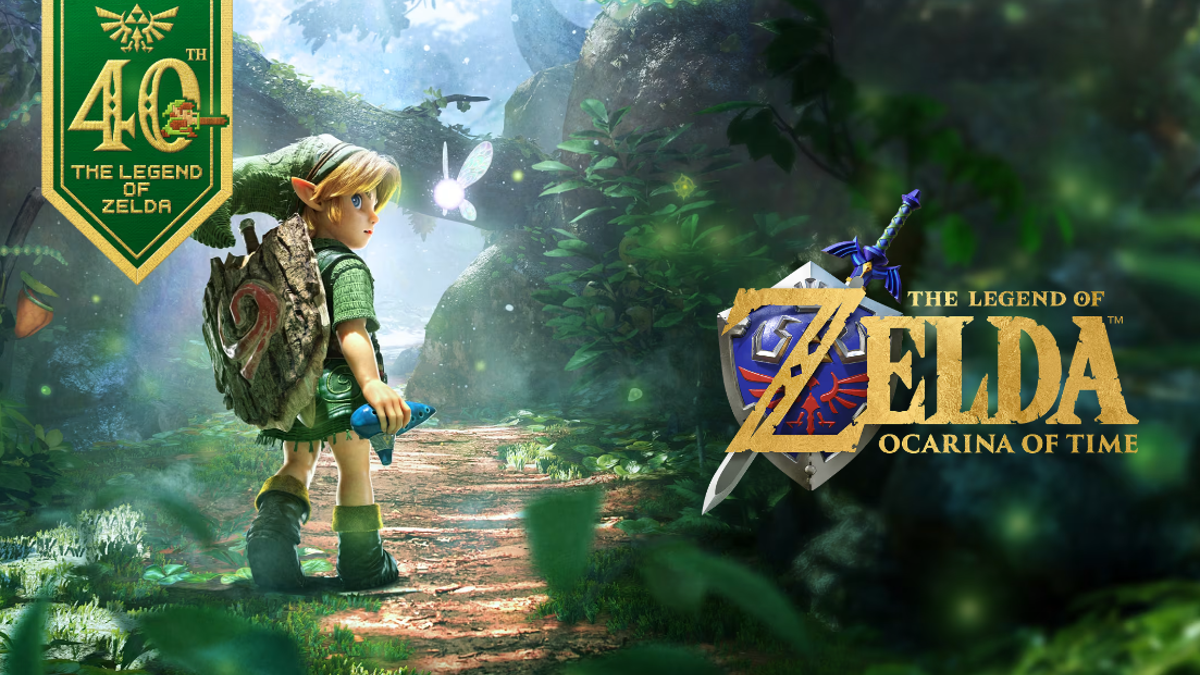
Photo Credit: Nintendo
Nintendo shared exciting insights into the new The Legend of Zelda: Ocarina of Time remake, including brand-new orchestral music and classic N64 samples.
It’s the 40th anniversary of Nintendo’s classic Legend of Zelda game series, and the remake of the fan-favorite hit Ocarina of Time releases on November 5. A series well loved for its iconic and influential music, Nintendo has always given each installment its own unique sound. The original Ocarina of Time was no different, but it’s been 28 years since the original’s release on Nintendo 64, and the Nintendo Switch 2 remake has some big shoes to fill.
That’s why Nintendo is investing the time and effort to go the extra mile, writing brand-new music for additional cutscenes and going back into the source files to reconstruct the original N64 samples.
“There are a lot of new cutscenes in this game, so we composed new music to go with them,” said sound director Masato Ohashi. “For example, in a scene set in Kokiri Forest, we incorporated motifs from the Kokiri Forest background music and arranged them to fit the scene.”
Ohashi stated that the music was fully orchestrated but pointed out that such an approach isn’t an unusual practice these days. But instead of simply hiring an orchestra, Nintendo went back to the original N64 soundtrack to see how it was arranged to inform the design of the remake. The compositions, he said, didn’t merely increase in volume to emphasize various moods but utilized shifts in pacing; as a result, “grander” areas in the remake will be given more sweeping orchestral arrangements while the simpler moments will be given limited instrumentation.
“The music in The Legend of Zelda: Ocarina of Time is different,” added producer Hidemaro Fujibayashi, noting the differences between this installment and the more recent Breath of the Wild and Tears of the Kingdom. Both games were deliberately scored to provide a more ambient soundscape.
“It has real power to guide players’ emotions, whether by heightening their excitement or by capturing the place or moment they’re in. Listening to it again for this game, I was reminded of just how many emotionally stirring pieces there are.”
Ohashi also confirmed that older songs combine the original N64 version with a full orchestra, which is very similar to Nintendo’s approach for the remake of The Legend of Zelda: Link’s Awakening.
“We didn’t use the audio output from Nintendo 64 as-is,” clarified Ohashi. “Instead, we used the original Nintendo 64 sound source as a reference to faithfully recreate some of the sounds. We wanted to do something only NIntendo could as a way of bringing back memories of that time.”
“The first time I heard it, I couldn’t help asking, ‘Are we seriously going ahead with this?’ But in the end, I think mixing in the sounds from that era makes the game feel like more than just a modern remake,” Fujibayashi concluded.
Meanwhile, the Nintendo Switch 2’s built-in microphone gives gamers a new way to experience Ocarina of Time by allowing players to hum a song they’ve learned in the game and hear Link perform it on his ocarina. The feature began development about a year ago, when Lead Director Eiji Aonuma suggested it.
Aonuma said he had real instruments in mind with the feature, since the popularity of the game has made the ocarina a popular instrument. Fujibayashi said the developers had no end of trouble getting the feature to work, especially getting the Switch 2 to recognize the sounds correctly, but he calls the microphone-driven ocarina “a very Nintendo idea.” Aonuma acknowledged that the voice recognition feature doesn’t make progressing through the game any easier, but that “being able to interact with the world in such an intuitive way makes it feel much closer to you.”


