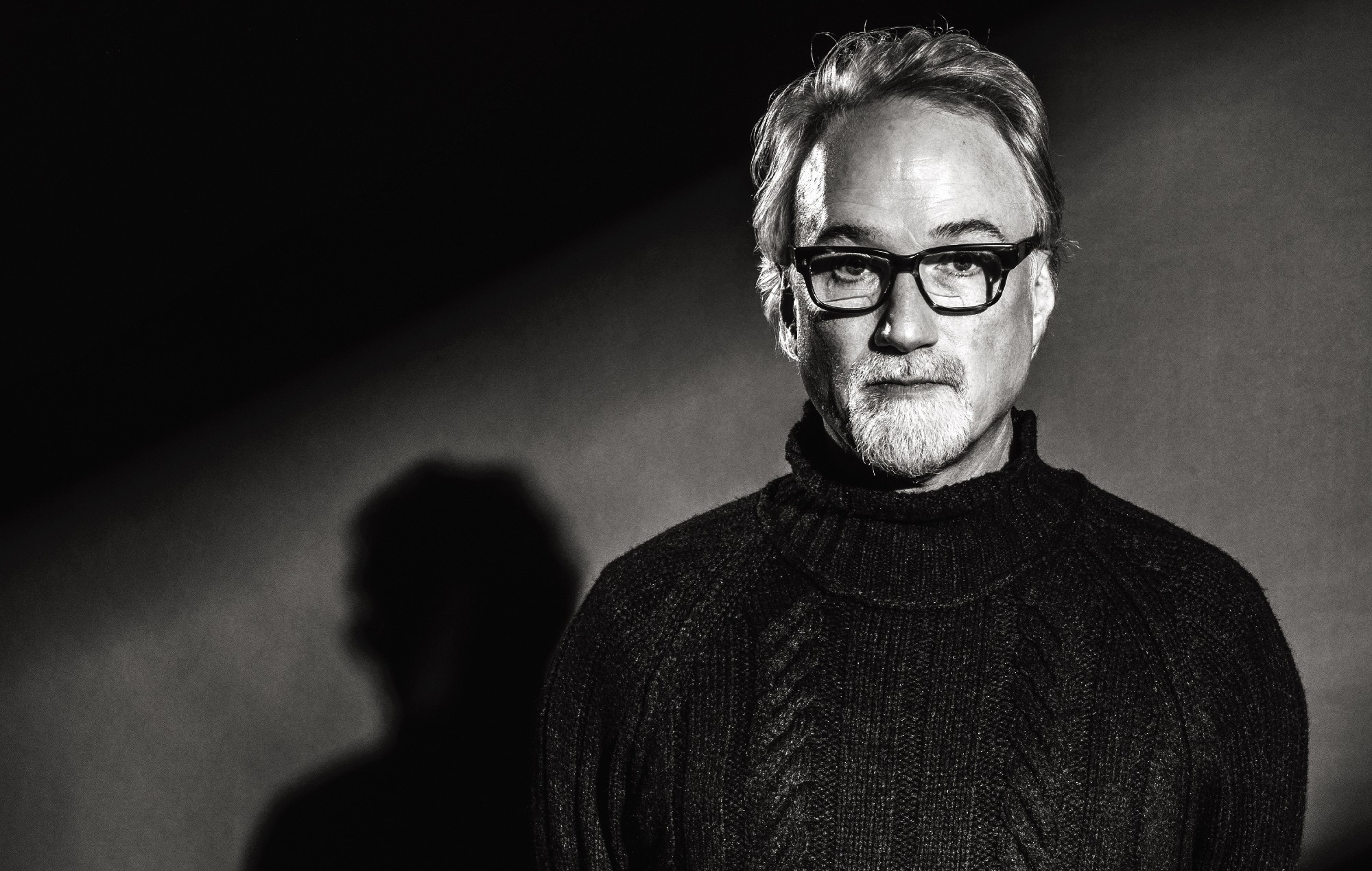
David Fincher is ready to take on the critics. It’s surprising that he has to, given that his latest film, The Further Mis-Adventures of Cliff Booth, written by Quentin Tarantino and starring none other than Brad Pitt, has received near-unanimous praise from the people who watch movies for a living.
Somewhere between a sequel and spin-off to Tarantino’s Once Upon A Time In Hollywood, the wildly entertaining flick follows the titular Hollywood stuntman into 1977. With his entertainment career on the skids, Booth’s turned to solving problems for the rich and famous. When he agrees to help out TV star Charlie Peters (Scott Caan), he crosses paths with the terrifying Verdusco brothers (Matt Groove and JB Tadena), a pair of Filipino gangsters who think nothing of the ultra-violence that’s been Tarantino’s stock-in-trade since 1992’s Reservoir Dogs.
With its immersive depiction of ‘70s LA, zippy dialogue and jaw-dropping set-pieces, it’s the perfect meeting point of Tarantino’s excess and Fincher’s famously taut, controlled directorial style. As NME’s Sophie Charara put it in her four-star review: “It’s possible that no movie has ever vibed quite as hard as this movie vibes.”
So, what’s the problem? “Somebody – I think it was Quentin – showed me something on Twitter or something like that,” Fincher confides in NME when we meet in a super-swanky central London hotel suite. The 64-year-old sounds only slightly exasperated. “It was like: ‘Why [is the film full of] songs that you would have heard on the radio in 1977? Why didn’t they wanna do anything interesting?’ I was like: ‘It’s supposed to sound like 1977 – on the radio!’ I thought that was the brief!”
Indeed, Cliff Booth boasts a soundtrack to die for – that is, if your idea of Heaven is silky soul (Hot Chocolate’s ‘You Sexy Thing’), pounding classic rock (AC/DC’s ‘Dirty Deeds Done Dirt Cheap’) and motorik disco (Donna Summer’s ‘I Feel Love’). With much of it pumped out via – yes – the radio, this makes for a heady evocation of late ‘70s Hollywood sleaze. In one standout sequence, the aforementioned AC/DC track blares from the PA as Booth crunches through the gears of a battered racing car during a demolition derby, whipping up mud with maniacal glee.
Originally, the scene featured a totally different song, which was swapped out for AC/DC on Pitt’s recommendation. The result “was in perfect sync”. In fact, the match-up was a little too perfect: “I said to Kirk [Baxter, editor], ‘It looks like a music video. You need to fuck this up!’ So he made it a little bit more disjointed.”
Brad Pitt in ‘The Further Mis-Adventures Of Cliff Booth’. CREDIT NetflixThe Denver, Colorado-born Fincher knows a thing or two about music videos, having cut his teeth on the medium in the ‘80s and early ‘90s, helming promos for the likes of Madonna (including ‘Express Yourself’ and ‘Vogue’), George Michael (‘Freedom ’90’) and The Rolling Stones (‘Love Is Strong’).
“The most important lesson that music videos taught me,” he says, “was that the people I was interfacing with were not only artists of my equal; they were also the stars of these movies that we were making together – and they were the fucking studio. It’s their movie; it’s their fucking reputation and their face. And, whether they understand it or not, they are going to be paying it down for many years to come. So I felt an incredible responsibility to the artists that I worked with.”
He’s “exceedingly respectful” of musicians and actors, he explains, “in a way that I’m not respectful of the studio heads”. After all, it’s the stars who are preserved for posterity, not the suits behind the scenes: “You’re talking to [influential Hollywood executive] Amy Pascal and her worldview is: ‘How is this gonna reflect on me from Monday to Friday?’ You make a video for somebody and that thing reflects on them for as long as YouTube is alive.”
As a result, the young director felt emboldened to “push” his musical collaborators to strive for greatness: “I remember, many times, going to get Madonna out of her trailer and saying, ‘This is your million dollars. We need one more shot. I understand you’re tired, but…’” And how would Her Madgesty respond? “She’s very smart about that stuff. I’m not poking a button where I don’t know what the response [will be].”
Fincher had eclectic music taste as a teenager, getting his groove on to Earth, Wind & Fire, Genesis and King Crimson alike. When he attended middle school in Marin County in the mid-’70s, he naturally took film classes, where the students would be handed a 45 record and tasked with making a (very) short Super 8 movie to accompany it. When MTV launched in 1981, the aspiring filmmaker thought: “Holy shit! I know how to do that!”
Having mastered needle drops before he even entered a professional film studio, Fincher moved into movies with 1992’s much-maligned Alien 3. He was famously at loggerheads with the studio, who kneecapped his somewhat experimental vision for the sequel, resulting in a messy compromise (though it’s since been favourably reappraised by some critics).
Elizabeth Debicki and Brad Pitt in ‘The Further Mis-Adventures Of Cliff Booth’. CREDIT NetflixBrad Pitt co-produced The Further Mis-Adventures of Cliff Booth and suggested Fincher for the gig. The director once claimed he lacked the “intestinal fortitude” to take on the responsibility of a Star Wars movie – but what about a Tarantino project? “This movie has caused an exceptional amount of gastrointestinal distress,” he laughs, “because I don’t want to let my friends down. I can’t do what Quentin does, but I can do what I do with his ideas. Brad was like, ‘You do you.’ Listen: If I had had the kind of support from 20th Century Fox that I got from Quentin Tarantino, I think Alien 3 would have been a lot better movie.”
Fincher hit paydirt with 1995’s grimy serial killer drama Seven, his second feature and first collaboration with Pitt. The film’s opening titles feature a creepy, muted remix of Nine Inch Nails’ industrial banger ‘Closer’, marking the start of another long-standing creative relationship, as the band’s Trent Reznor and Atticus Ross have scored his movies since 2010’s Facebook takedown The Social Network. Fincher’s latest is no exception, with the pair crafting a noodly, jazz-infused sound bed that adds to the movie’s freewheeling air. What is it about Ross and Reznor that meshes so well with his worldview?
“They’re just amazing,” he says. “They push you to defend your position.” The NIN lads simply understand the language of film, it seems: “They were musicians back then; they’re now purveyors of emotions and they understand that we’re going to tease this out in order to make this land better – with a bigger impact.”
Brad Pitt in ‘The Further Mis-Adventures Of Cliff Booth’ CREDIT: NetflixWhether it’s queuing up The Beatles’ ‘Baby You’re a Rich Man’ for the final scene of The Social Network (yes, it really did cost a million dollars to license the song) or The Pixies’ ‘Where Is My Mind?’ at the end of Fight Club, Fincher is a master of impact himself. The latter needle drop is arguably one of the most memorable in cinema history.
“I’m glad you’re saying that,” he shoots back, “because when I first showed it to four people – who shall remain nameless – they were like: ‘Hmm – a little obvious, isn’t it?’ I was almost talked out of it.” Surprisingly, for such an exacting filmmaker, it seems the secret to a killer soundtrack is don’t overthink it.
‘The Further Mis-Adventures Of Cliff Booth’ is out now on IMAX, and will be available on Netflix from December 23
The post Eighties icons, industrial bangers and the million-dollar needle drop: how David Fincher uses music in his blockbusters appeared first on NME.